Testing the Fuses and Relays in your Infrared Sauna Control Box

This how to is a special request, Testing the Fuses and Solid State Relays in the control box of your Home Infrared Sauna.

You will need the following tools.

-          Muliti-meter with Voltage AC, Voltage DC and Continuity (Tone Test)
-          Philips #2

Testing the Fuses

Typical multi-meter with manual voltage selection

Typical multi-meter with manual voltage selection

I have pointed out above the setting on my meter that performs a Continuity test (Tone Test). If there is continuity across the fuse (while the system is off, and unplugged) then a tone will ring out confirming the Fuse is in functioning order. To start test the meter by placing the probes together to make sure you get a tone, if you do simply place one probe on each end of the fuse (pictured bellow), if you get the same tone the fuses are ok.

With the fuses tested, and replaced if necessary, we can test the Relays 

TEsting the power supply.png

The Relay has 2 sides Low Voltage DC (3-32vdc) switching side and the High Voltage switched side (110V/240V) (See picture above) 

We need to check both relays next to see if either/or one has failed. First to make sure the relays are getting the right switching voltage turn on the sauna and set it to run (if this is not possible it is likely a Switching Transformer Fault). With the sauna running select the DC ⎓ voltage setting on your meter (<20vdc⎓) and place the probes on either screw on the Low Voltage DC side of one of the Relays, you should get around 3.4vdc but anything over this will work.

Once you have tested both relays low voltage switching, and the voltage is correct, move to the High Voltage AC~ side. To test the High Voltage AC~ switched side of the relay select AC~ (200 for 110v or 750 for 240v) on the meter. Place one probe on a ground or common terminal and the other probe on one of the Line terminals of the relays (the wire directly connected to the fuse). This should have a constant voltage either 110-120 or 230-240. Moving to the other terminal, the Load, test again against the ground or common, if no voltage is observed then the relay is most likely faulty, meaning that the relay is no longer pulling in allowing the heaters to operate. The non-functional relay will need to be replaced, for a how to please see the video in the link bellow

The relays described in this post are available from our Web Store. We also have a video with a similar testing situation, and a subsequent video on replacing the components on our YouTube Channel

If you have a different meter, have any further questions, or are not confident with your testing results please comment bellow I’ll to get back to you as soon as I can

As always all electrical work must be undertaken by a licensed and competent professional in you local jurisdiction

Selecting the right Replacement Wall Controller for your Infrared Sauna

Once you have reached the point where you know you need to replace the Wall Control in your Home Infrared Sauna there are a few things you need to consider. Firstly the most obvious is the layout of the controller itself, is it Landscape or Portrait and what are the Dimensions. This is generally the easiest step, but makes the biggest impact on the look of the sauna after the repair, and on the ease of installation.

Health Mate, Komate, Luxo and other various Wall Controllers

Health Mate, Komate, Luxo and other various Wall Controllers

The measurement of the controller will vary depending on how it is mounted, whether inside a timber frame, flush mounted on the surface or between two immovable aspects of the sauna. It is very important to get the last part right, as some saunas have a wall controllers mounted tightly between the door and the glass window. So long as the measurement is close to the suitable replacement, modifications can be made like installing wider timber trims, or cutting out a little more of the lining to recess it in.

Measuring Wall Controller (2).jpg

The Functions of your current Sauna is next. Take note of all the buttons on your Wall Controller and what these perform/ed, at the basic level things like;
- Basic On/Off
- Temperature Selection
- Timer Function
- Light Switching (Internal/External)
- Chromotherapy Light Control

Other functions might also be;
- Onboard Audio (MP3, FM, Bluetooth)
- Reserve Function (Delay Start)
- Fresh Air Fan
- Secondary Heating Switch

In Most cases if the sauna has the functionality it can be re-connected and made to work again

Identifying-the-functions.jpg

Next is to work out the distance between the Wall Controllers and the Control Box. The Control Box is generally found in the ceiling under the lining but is sometimes either under the seat or in the wall bellow the Wall Controller. The reason this is important is that we need to know how long the cables will have to be that connect the Control Box to the Master Wall Controller and then to the Secondary Wall Controller (where applicable).
(The standard cabling lengths are detailed inside the descriptions of the controllers as they appear in the Online Store)

Red line indicating the approximate cable run from Wall Controller to Control Box

Red line indicating the approximate cable run from Wall Controller to Control Box

With all this information collected you now ready to select and purchase your Replacement Infrared Sauna Wall Controller and Control Box.
There is also optional Form that can be filled out with the information you have collected. Using this we can then help you choose and advise if any modifications will need to be made.

As always we are more than happy to help you through this process and guide you through a successful repair, so don’t hesitate to reach out via our Web Site or at; Service@customsaunasaustralia.com

Selecting the right Ceramic Infrared Sauna Tube for your Sauna

This simple guide is designed to help you select the correct sized Ceramic Infrared Heating Tube for your Infrared Sauna. It will also help you check for and diagnose some other simple related issues that can occur as a result of a heater failure.

First it is important to make sure that you have all the tools you will need to make the job easier
o   Philips #2 Screwdriver
o   Small Flat Screwdriver or Small Utility Knife
o   Pliers or small adjustable wrench/ Shifter
o   Digital Multi-meter (Optional)


Before getting started, make sure that you have the power disconnected from the Sauna. This is very important as in some rare cases the neutral/common side of the Heater may be found to be switched, while maintaining 240v potential to one side of the tube. This is a serious safety concern as it could lead to electrocution. The best way to do this is to remove the plug from the wall and leave it resting somewhere where you can see it. In the case of a hard-wired unit Isolate the power from a locally positioned Isolator/Disconnect or from the breaker in the board.


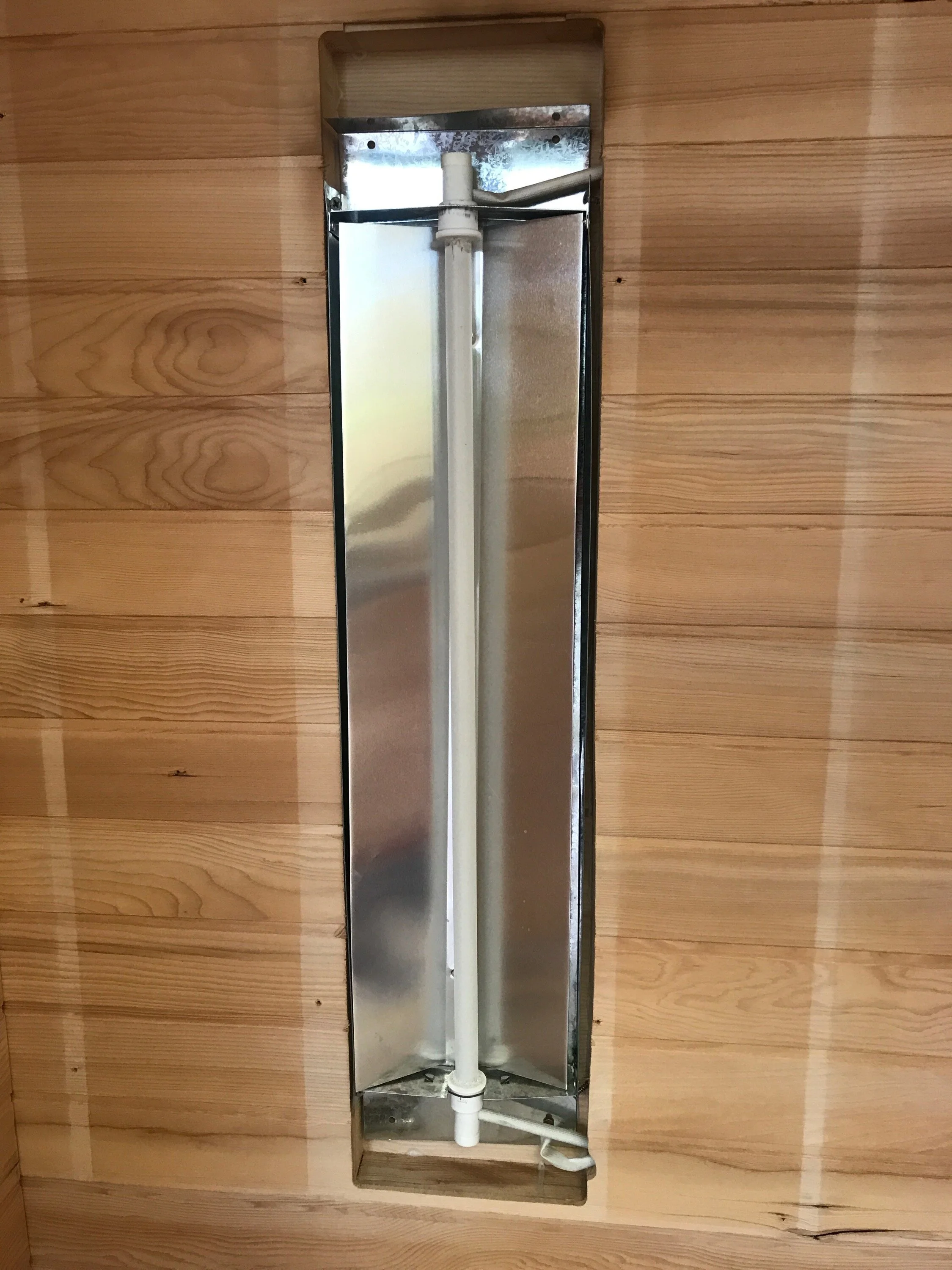
Now to remove the cover from the heater. Using the small flat blade screwdriver or utility knife remove the small timber caps usually covering the screws in the backrest and heater frames. Store these in a small container or other safe place for reuse. Using the #2 Philips screwdriver remove all the screws holding the frames and heater covers to the wall, again setting the screws aside in the small container. Place all the frames and covers somewhere out of the way, preferably outside of the sauna. This should now have exposed the entire ceramic heating tube allowing access for the next step.

Ceramic Infrared Heater Tube for Home Infrared Sauna

Cover of Heater removed to expose Endcap to Endcap

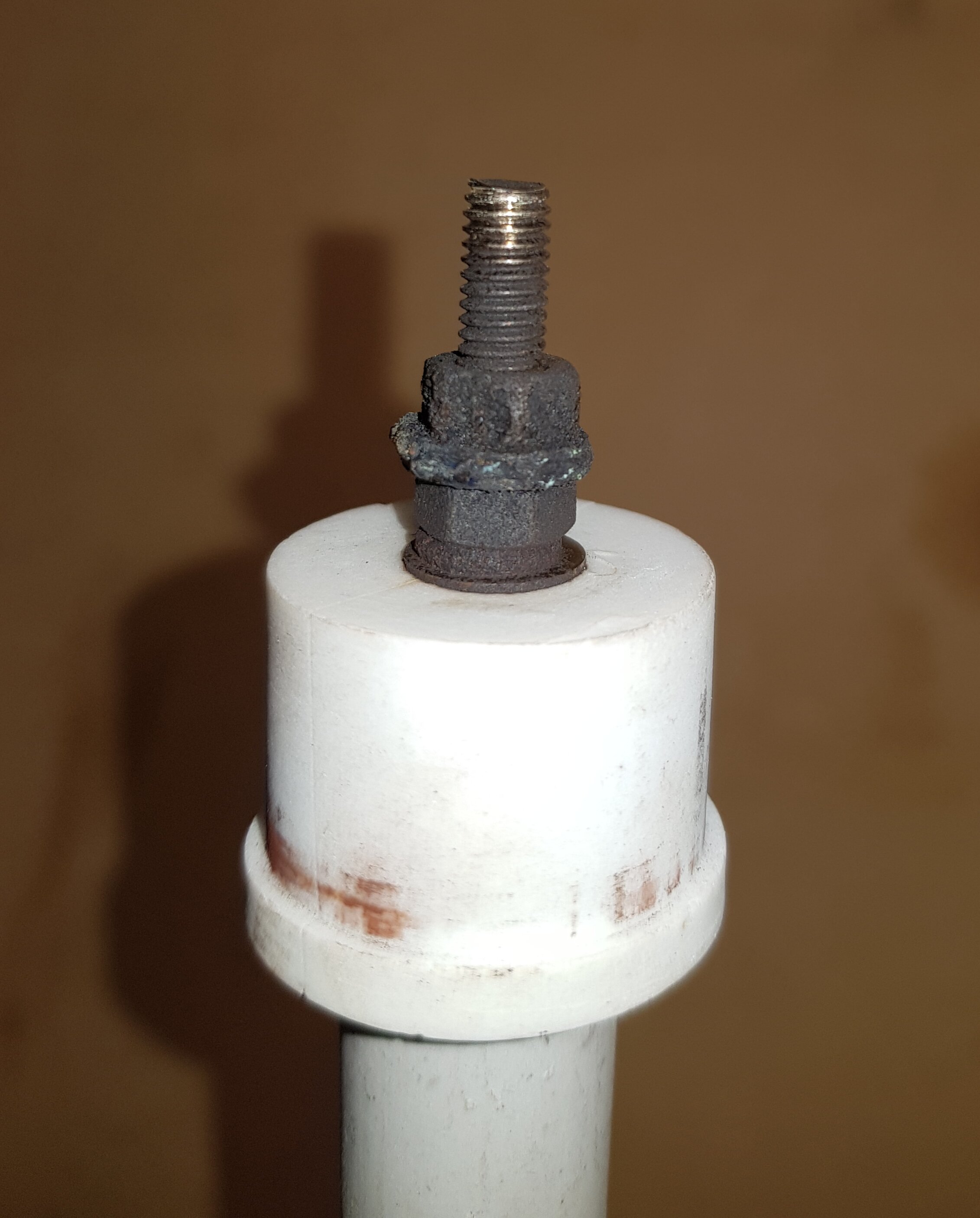
Before we move on to measuring the heater tube lengths it is important to visually inspect the wires connected to the top and bottom of the heater tube. These terminals can sometimes corrode due to moisture and heat, eventually becoming brittle and severing from the termination point. If this looks like it has already occurred or is showing signs of beginning, give the lugs and wires a stress test by trying to move them with a little force. This action should not stress out a healthy terminal but will likely break down one that is on the way out. I will cover repairing this closer to the end but for the moment just try to cover the bare ends of the conductor and NEVER connect the sauna back to the mains power until this has been fixed.

Ceramic Infrared Heater Tube with corroded threaded terminal

Tube with obvious corrosion. Client reported tubes no longer working, found to be connection completely disintegrated

Measuring your existing heating tube. As shown on the graphic bellow we need to get a measurement of the tube from Endcap to Endcap “Total Length” this is the reference we use for replacement parts when selecting from the Website.

Ceramic Infrared Heating Tube Selection guide

Ceramic Infrared Heating Tube Selection guide


·         In most cases the length also determines the wattage and does not require confirmation. If you would still like to confirm we can check using one of the existing ‘working’ heating tubes of identical length. To do this you will require a Mulit-Meter with Resistance (Ω) function. Before testing make sure that the power is disconnected from the sauna. Expose the two conductive/metallic ends of the heater tube by removing the ceramic screwed caps and terminal protection. Select Resistance (Ω) setting on automatic multi-meters, or the 200Ω setting where many options exist. Place one probe on each end of the heaters metallic conductor and take note of the reading. For a standard 240v 450W heater this should read about 127Ω or .127KΩ. Using an online Ohms calculator enter the available information, for Australian assume 240v and the resistance just measured. Long hand calculations shown.

Probes Test Croped.png
Ceramic heater Calculations.png

If you have any further questions or can’t find your exact sized Ceramic Heater Tube in the Store please reach out to us via our Service@customsaunas.com.au email. If you would like to place an order our rage of Ceramic Tubes are available here https://infraredsaunarepairs.com.au/infrared-sauna-parts/ceramic-heating-tubes. Always remember when dealing with anything to do with electricity never work live. If you have any doubts about the steps listed above contact us directly or use a local Licenced and Registered Electrical Contractor or Appliance Repair Person.